Why Chicago Multifamily Keeps Winning: How Neighborhood Trends Shape Property Values
Written by Niko Apostal, Managing Broker at Essex Three-Twelve
While investors in many parts of the country have spent 2026 navigating apartment oversupply and softening rents, Chicago has moved in the opposite direction.
In its peak-season 2026 Rental Competitiveness Report, RentCafe ranked Chicago the most competitive large rental market in the nation, overtaking longtime leader Miami. Chicago recorded a rental competitiveness index score of 91.8, the highest among 139 markets analyzed and well above the national average of 73.9. On average, approximately 17 prospective renters competed for every available apartment.
That ranking is encouraging for Chicago multifamily investors, but it only tells part of the story.
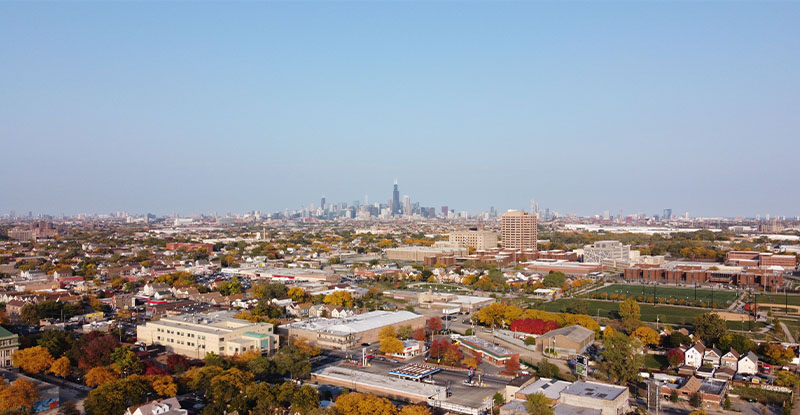
Chicago isn’t one rental market. It’s a collection of neighborhood-level markets, each with its own demand drivers, rental trends, and investment opportunities. Understanding how individual neighborhoods develop, connect, and attract renters is essential to evaluating multifamily property values.
Chicago’s Multifamily Market Is Built on Limited Supply
Chicago’s rental market strength begins with a fundamental imbalance: steady renter demand and limited new apartment supply.
RentCafe expects apartment deliveries across the region to fall below 4,000 units in 2026, the lowest total since 2012, and estimates that the metropolitan area faces a housing shortage of approximately 165,000 homes.
Marcus & Millichap projects year-end vacancy near 3.8%. CoStar data presented at the Chicago Association of REALTORS® market outlook showed Chicago ranking among the nation’s top five markets for rent growth for seven consecutive quarters. Bisnow has also reported that rents have climbed nearly 50% over the past five years.
Meanwhile, several overbuilt Sun Belt markets have experienced slowing rent growth as new apartment deliveries outpace demand.
With Chicagoland multifamily pricing in the low-to-mid $200,000s per unit and cap rates of approximately 6% to 6.7%, the region can offer an attractive entry point compared with higher-priced coastal markets.
For investors, this combination of constrained supply, rental demand, and comparatively accessible pricing makes Chicago a market worth examining. However, citywide fundamentals are only the starting point when evaluating an individual property.
What Drives Chicago Multifamily Property Values?
While market-wide statistics provide valuable context, multifamily property performance is often influenced by conditions at the neighborhood and even block level. Several factors help explain why buildings in different parts of Chicago can experience different rental trends, occupancy levels, and investment outcomes.
Development and Employment Opportunities
Neighborhoods attracting new corporate investment, residential development, and mixed-use projects can experience increased renter demand as employment and amenities expand.
According to Northmarq, the Loop and surrounding neighborhoods, including the West Loop, South Loop, River North, and Fulton Market, led Chicago in rent growth, averaging 5.5% over the past year and exceeding $3,000 in monthly rent. Cross Street’s second-quarter report identified Fulton Market as a particularly strong performer, with rent growth of 9%.
Chicago’s diversified economy, supported by industries including finance, healthcare, and professional services, provides a broad employment base that can help sustain rental demand across multiple neighborhoods.
Transit Access and Walkability
Proximity to CTA “L” stations, Metra lines, and major transportation corridors remains an important consideration for renters and multifamily investors.
Convenient public transportation expands the number of employment centers tenants can access without relying on a vehicle. Buildings within walking distance of transit, restaurants, shopping, and neighborhood amenities may also benefit from stronger leasing appeal.
In a city where location can vary significantly from block to block, transit accessibility and walkability can help distinguish one investment opportunity from another.
Rental Demand and Tenant Profile
Rental demand is not uniform across property types or price points.
Northmarq’s first-quarter report showed Class A rent growth of just 0.4%, while its second-quarter findings indicated stronger growth among middle- and lower-tier apartments.
For multifamily investors, this reinforces the importance of understanding the renter demographic a property serves. Workforce-oriented housing, where renters may have fewer affordable alternatives, can offer resilient demand and long-term investment potential.
Demographics and Neighborhood Character
Who chooses to live in a neighborhood, and what attracts them there, plays an important role in how multifamily properties perform.
Luxury apartments in the Gold Coast and Streeterville appeal to a different renter profile than properties along the village-style streets of Oak Park or the diverse, lakefront-adjacent blocks of Rogers Park.
Unit configuration matters as well. Larger apartments with multiple bathrooms may appeal to households prioritizing space and access to desirable schools, while one- and two-bedroom units can attract renters seeking proximity to restaurants, nightlife, and transit.
Understanding these neighborhood characteristics helps investors evaluate rental potential, tenant demand, and the improvements most likely to support a property’s long-term performance.
Start With the Investor’s Goals, Not Just the Market
Most of the investors I work with aren’t institutions. They’re doctors, contractors, and families who have saved for years to purchase their first small multifamily building.
That’s why the first question I ask is simple: “What do you need this building to do for you?”
Is the goal to fund retirement, help pay for a child’s college education, or generate additional monthly income? Does the buyer want to manage the property personally, or would they prefer a more hands-off investment?
The answers shape everything that follows, from neighborhood selection and property condition to financing, renovation budgets, and expected returns.
The Buyer Who Prioritizes Peace of Mind
One client told me upfront that he wanted to own an investment property without losing sleep over it.
We focused on newer construction between Grand Avenue and Armitage Avenue, on either side of the expressway, where rents were reaching new highs for the area and the properties offered more predictable maintenance needs.
He accepted a lower potential yield in exchange for a newer building that required less day-to-day involvement. For his investment goals, that was the right trade-off.
The Buyer Who Wants Long-Term Growth
Another couple, in their late thirties, was willing to invest time and effort into a property today while planning for family expenses expected to increase over the next 15 years.
We explored Fulton Market, the West Loop, and areas surrounding the United Center, where neighborhood investment and rental growth have created opportunities for buyers willing to take on renovations.
They focused on acquiring a property at a lower price per unit while budgeting for improvements, positioning themselves to participate in the neighborhood’s continued evolution.
The Buyer Who Prioritizes Cash Flow
One repeat client has little interest in owning a high-profile property. Her priority is dependable rental income and an opportunity to improve a building over time.
We focused on established neighborhoods such as Albany Park, where older multifamily buildings and workforce-oriented rental demand can offer opportunities for steady occupancy and value creation.
For an investor willing to renovate strategically and manage the property carefully, improving an existing building can provide a path toward stronger long-term cash flow.
These investors have different objectives, but the principle remains the same: the right multifamily investment depends on how well the property, neighborhood, and ownership strategy align with the buyer’s goals.
Why Chicago’s Development Challenges Can Create Investment Opportunities
Chicago can be a challenging city in which to develop and operate multifamily properties, and those challenges can discourage some outside investors.
In my experience, zoning regulations can be complex, permitting timelines often exceed expectations, and inspections add another layer to the development process. Chicago’s tenant-protection regulations also require property owners to understand and carefully follow their legal obligations.
Industry observers, including Bisnow, have identified these barriers as contributing factors to the city’s limited new apartment supply.
However, I believe some of Chicago’s greatest investment opportunities exist within these challenges.
Limited new construction can help support demand for existing rental properties. The same barriers that make development difficult can also reduce the risk of sudden oversupply, which has affected apartment markets elsewhere in the country.
That doesn’t eliminate investment risk, but it reinforces the importance of understanding the local market and operating properties effectively.
For investors seeking to navigate these challenges, I encourage getting involved with local builder and property-owner organizations, following resources such as the Straight Up Chicago Investor Podcast, and connecting with other housing providers.
Through Essex Three-Twelve events and ongoing conversations with Chicago property owners, we’re working to help foster that same exchange of market knowledge, practical experience, and investment insight.
Building relationships with experienced local professionals can help investors identify opportunities, understand regulatory considerations, and make more informed decisions about their properties.
What Chicago’s Rental Market Means for Multifamily Investors
Chicago’s ranking as the nation’s most competitive large rental market reflects several important fundamentals: limited apartment supply, a diversified employment base, and sustained renter demand.
But citywide statistics only get an investor to the front door.
A property’s long-term value depends on its immediate surroundings, including nearby transit, employment centers, neighborhood amenities, renter preferences, and the direction of surrounding development.
Real estate investing is not without risk. It requires capital, time, and careful decision-making, and it isn’t the right fit for every buyer.
However, for investors willing to do the work or partner with experienced professionals, Chicago’s smaller multifamily market continues to offer meaningful opportunities.
At Essex Three-Twelve, neighborhood-level market knowledge is central to how we advise clients. Whether an investor is seeking a stabilized property, long-term appreciation, or consistent cash flow, our goal is to help identify opportunities that align with their financial objectives and investment strategy.
Work With Essex Three-Twelve
Considering a multifamily investment in Chicago? Essex Three-Twelve specializes in the acquisition and disposition of three- to twelve-unit apartment buildings, providing investors and property owners with neighborhood-specific market insight, valuation expertise, and tailored investment guidance.
Connect with our team to discuss your goals and explore which Chicago neighborhoods and multifamily property types may be the right fit for your investment strategy.
About Essex Three-Twelve
Essex Three-Twelve is a Chicago multifamily brokerage specializing in investment sales of three- to twelve-unit apartment buildings. As an entity of Essex Realty Group, Essex Three-Twelve provides property owners and investors with market insight, valuation expertise, strategic marketing, and transaction advisory services tailored to Chicago’s small multifamily market.